

Kids and Skincare: When Is It Too Much?
Kids and Skincare: When Is It Too Much?
Thoughts from an esthetician of nearly 20 years — and a mom of two girls
I’ve worked in skincare for almost 20 years, and I’m also raising two daughters who are currently 7 and 10. So, as you can probably imagine, the topic of kids and skincare comes up a lot in our house.
Skincare has changed dramatically since I first became an esthetician. Today, children are exposed to skincare earlier than ever before. They watch GRWM — “Get Ready With Me” — videos, recognize brands at Sephora, know what serums are, and can probably tell you more about whatever product is trending on TikTok than many adults. And I actually don’t think kids having an interest in skincare is necessarily a bad thing. What I think we need to talk about is the difference between teaching children to care for their skin and teaching children that their skin constantly needs to be improved.
Those are two very different messages.
Skincare Can Be a Form of Hygiene
I’m completely comfortable with children having a very simple skincare routine — even as young as 7.
I look at it similarly to brushing your teeth, washing your hair, taking a shower, or learning to use deodorant. It’s simply learning how to take care of your body. You brush your teeth twice a day not because there is something wrong with your teeth, but because you’re taking care of them. Skin can be approached the same way. A child can learn to gently wash their face at the end of the day, especially after sunscreen, sweat, sports, dirt, makeup for dance or cheer, or just being a kid.
And instead of waiting until their skin feels dry to introduce moisturizer, I actually love the idea of getting kids into the habit of using a simple moisturizer with SPF during the day. That’s getting them way ahead of the curve. If we can teach a child early that protecting their skin from cumulative sun exposure is just part of the morning routine, we may help preserve healthier skin for much longer — and hopefully put off the day when they actually need corrective skincare.
There’s another reason I think creating that routine early can be helpful.
At some point later in childhood, adolescence, or adulthood, your child may develop acne, rosacea, eczema, sensitivity, or another skin condition that requires a consistent regimen. If they have already spent years washing their face and applying one or two products every day, we aren't asking them to suddenly develop an entirely new habit. The habit already exists.
We simply change the products. Instead of trying to convince a 14-year-old with acne to suddenly cleanse their face every night and use treatment products consistently, they've already learned that taking care of their skin is part of taking care of themselves. To me, that is the value of introducing skincare early. Not because their seven-year-old skin needs treatment. Because we're teaching them how to care for it.
But Kids Don't Need a 7-Step Skincare Routine
This is where I start to have a very different opinion.
A cleanser? Great.
A basic moisturizer? Absolutely. A moisturizer with SPF? Even better.
Sunscreen? Yes, yes, yes.
A fun lip balm? With SPF?! SOLD.
But serums, exfoliating acids, retinol, anti-aging products, brightening treatments, resurfacing products, peel pads, multiple toners and essences? No.
Not because skincare products are inherently bad. Because a child's skin usually doesn't need them.
At 10 years old, healthy skin is already doing exactly what we spend hundreds of dollars trying to convince adult skin to do.
It is naturally renewing itself efficiently. It has abundant collagen. It has elasticity. It generally has excellent circulation. It isn't experiencing decades of cumulative sun exposure. It isn't dealing with age-related changes in cell turnover.
It doesn't need to be "brightened," "firmed," "resurfaced," or "renewed." Their skin is functioning exactly the way it was designed to function at that age. There isn't anything we need to optimize. And I think that's an important message to send our kids:
Your skin doesn't need to be improved simply because skincare products exist.
More Products Do Not Automatically Equal Better Skin
This is one of the biggest misconceptions in skincare — for adults, too. More products do not automatically equal better skin. And this is coming from the Founder and CEO of a national skincare brand. I literally make and sell skincare products for a living. So if I'm telling you that sometimes your skin needs less, that should probably say something.
Skincare products are tools. The goal isn't to own every tool in the hardware store. The goal is to use the right tool when you actually need it. When we're talking about children, unnecessary active ingredients can create problems that weren't there in the first place. Ingredients designed to exfoliate the skin, increase cell turnover, control oil production, reduce pigmentation, or otherwise change the way the skin behaves can be incredibly useful when we're treating an actual concern.
But if there isn't a problem to treat, there isn't necessarily a benefit to changing what the skin is already doing well. Overusing active or stimulating ingredients can lead to:
- dryness
- redness
- burning or stinging
- irritation
- increased sensitivity
- disruption of the skin barrier
- flaking
- inflammation
- reactions that can sometimes look like breakouts
And then something ironic happens.
We start adding more products to fix the irritation caused by products the child didn't need in the first place. This happens to adults all the time.
Sometimes the best thing I can do for a client's skin is actually take products away. Amy, if you're reading this, this is NOT for you. You still need your cleanser, SPF and retinol like we discussed. But for everyone else, the point stands.
Skincare should always have a purpose. If there's acne, we treat acne. If there's eczema, we support eczema-prone skin and involve the child's healthcare provider when needed. If there's significant sensitivity, we figure out what's causing it. But healthy, normal childhood skin doesn't need us constantly trying to make it perform better.
Skincare Isn't a Hobby Without Consequences
I also think this is where skincare differs from a lot of the other things kids like to experiment with. A child can try a crazy hairstyle. They can paint every fingernail a different color. They can wear sparkly eyeshadow, mismatched clothes, temporary tattoos, bracelets up to their elbows, or whatever trend is happening this week. Most of those things come off. Hair grows out. Nail polish gets removed. Clothes get changed.
Skincare is different. Skincare products actually interact with living tissue.
That doesn't mean we need to make skincare scary or tell kids they can't have fun with it. But it does mean experimentation deserves a little more parental guidance. A product being sold at a beauty retailer doesn't automatically mean it's appropriate for every age or every skin type.
A serum that makes perfect sense for a 40-year-old with pigmentation may make absolutely no sense for a 10-year-old whose skin is healthy and functioning normally.
And sometimes the biggest parenting challenge is explaining: "It's not a bad product. It's just not a product you need."
Skincare Shouldn't Become a Status Symbol
There’s another side to this conversation that has almost nothing to do with skin.
Kids have always wanted the “cool thing.” When I was growing up, it was having the same American Eagle fleece jacket everyone else had — mine was red, obviously. It was wearing your hair a certain way (hello, sleeping in braids just to wake up with perfectly crimped hair). And it was owning every possible flavor of Lip Smackers and wearing them around your neck like you had just won an Olympic gold medal. The trends may have changed, but the desire to have what everyone else has definitely hasn’t.
Now, sometimes it's a $50 or $80 moisturizer. And honestly? I understand why kids want it.
The packaging is cute.
Their friends have it.
They've seen it online.
Walking around Sephora is fun. Having a little collection sitting on the bathroom counter can feel exciting and grown-up. Wanting the trendy thing is normal. But wanting something and needing something are not the same thing.
And I don't love the idea of skincare becoming another status symbol where children compare what products they own, how expensive their routine is, or how many steps they have. I don't want my daughters believing that having a drawer full of skincare somehow means they're taking better care of themselves than the child using a $12 cleanser and sunscreen. Because, very often, that simple routine is exactly what their skin needs.
There Is Also a Psychological Side to This Conversation
I want to tread carefully here because I am very far from being a psychologist.
I'm an esthetician and a mom. And I'm certainly not a perfect parent. I'm figuring out where these boundaries should be right alongside everyone else. I also have two girls growing up in a world that is very different from the one I grew up in.
They see beauty trends constantly, skincare routines, and filters. They see influencers and children their own age using products marketed to adults.
And I think there's a fine line we have to walk as parents.
I want my daughters to explore and have fun. I want them to play with beauty and fashion and figure out what they like. I don't think liking skincare or wanting to walk around Sephora automatically means something unhealthy is happening. Sometimes a lip balm is just a lip balm. Sometimes a cute moisturizer is simply fun.
But I also don't want my 10-year-old standing in front of the mirror analyzing her pores.
I don't want her wondering whether her skin is "glowy enough", or worrying about preventing wrinkles before she has even finished elementary school. I don't want her looking for dark spots that aren't there or wondering whether she needs to make her face firmer, brighter or smoother. And I definitely don't want her believing there is something wrong with her face because an algorithm told her she needs six products to improve it. Children have enough things they're going to eventually become self-conscious about. I don't think we need to introduce concerns they haven't thought to have yet.
There is a difference between teaching a child: "Let's take care of your skin." and teaching them: "Let's look for things about your skin that we can improve." That's a distinction I think about a lot as both an esthetician and a mother.
The Language We Use Matters
Instead of saying: "You need skincare so your skin looks better." I prefer: "We wash our face because we've been outside all day." "We put sunscreen on because we're protecting our skin." "We moisturize because it helps keep our skin barrier healthy."
It seems like a small difference, but the underlying message is completely different. One teaches care. The other can unintentionally teach correction.
I want my girls to understand that skincare is something we can do for ourselves without believing that our natural appearance is a problem waiting to be solved.
Puberty Is When the Conversation Starts to Change
Of course, children's skin doesn't stay the same forever.
Puberty is often the natural transition point where skincare starts to move beyond basic hygiene. Hormones begin changing, oil production can increase, sweat changes. Pores may become more congested, blackheads and breakouts may start appearing. And that's when we begin adjusting the routine based on what their skin is actually doing.
Maybe the cleanser changes. Maybe acne treatment becomes appropriate. Maybe we introduce a different moisturizer. Maybe we need to talk about ingredients like salicylic acid or benzoyl peroxide. But even then, I don't think the answer is automatically a huge routine.
The goal is still:
What does this skin need right now?
Not:
How many products can we add?
And if you start noticing persistent, painful or scarring acne, significant redness, rashes, eczema, or another ongoing concern, that's when it's worth getting professional guidance rather than letting TikTok build the treatment plan.
The Chelsea-Approved Kid Routine
For most young children with healthy skin, I believe boring is beautiful.
Morning
Simple moisturizer with SPF or an appropriate sunscreen. And yes, if they'll use an SPF lip balm, I'm counting that as a parenting win.
Evening
Gentle cleanser. Simple moisturizer if needed. That's it.
No anti-aging.
No aggressive exfoliation.
No product-layering contests.
No skin cycling-is that still a thing?
No chasing "glass skin."
No 14-step Sunday reset.
Just clean, protected, healthy skin.
Sometimes Saying "Not Yet" Is Part of Parenting
This is probably the hardest part. Especially when "everyone else has it."
I know that argument very well. Sometimes letting your child pick out a gentle cleanser in a fun bottle is an easy compromise. Sometimes the answer to the viral exfoliating serum is simply:
"That's a great product for someone whose skin needs it. Yours doesn't need it yet."
Not:
"Skincare is bad."
Not:
"You're too young to care about how you look."
Just:
"Your skin is already doing a really good job on its own."
I actually think there's something pretty powerful about teaching our daughters that. There will be plenty of time later in their lives for active ingredients, exfoliation, antioxidants, retinoids, peptides and all the incredible things modern skincare can do. But childhood doesn't need an anti-aging strategy.
Let Them Be Kids
As an esthetician, I love skincare. I built my career around it. And as the founder of a skincare company, I obviously believe deeply in what great skincare can do when it's used appropriately.
I've seen firsthand how much confidence can come from helping someone finally get their acne under control, calm chronic redness, improve pigmentation or simply feel comfortable in their own skin again. Skincare can be incredibly empowering. But as a mom, I also want my girls to know that there is a season for everything. Right now, I want them to wash their faces. I want them to wear SPF. I want them to learn how to take care of themselves. And then I want them to run outside, get sweaty, swim, play, laugh, get dirty and completely forget what their pores look like. Because they're 7 and 10. Their skincare routine should support their childhood. It shouldn't become another thing they feel like they need to perfect.
And maybe that's the balance we're all trying to find:
Teach them to care for their skin without teaching them that their skin needs to be fixed.
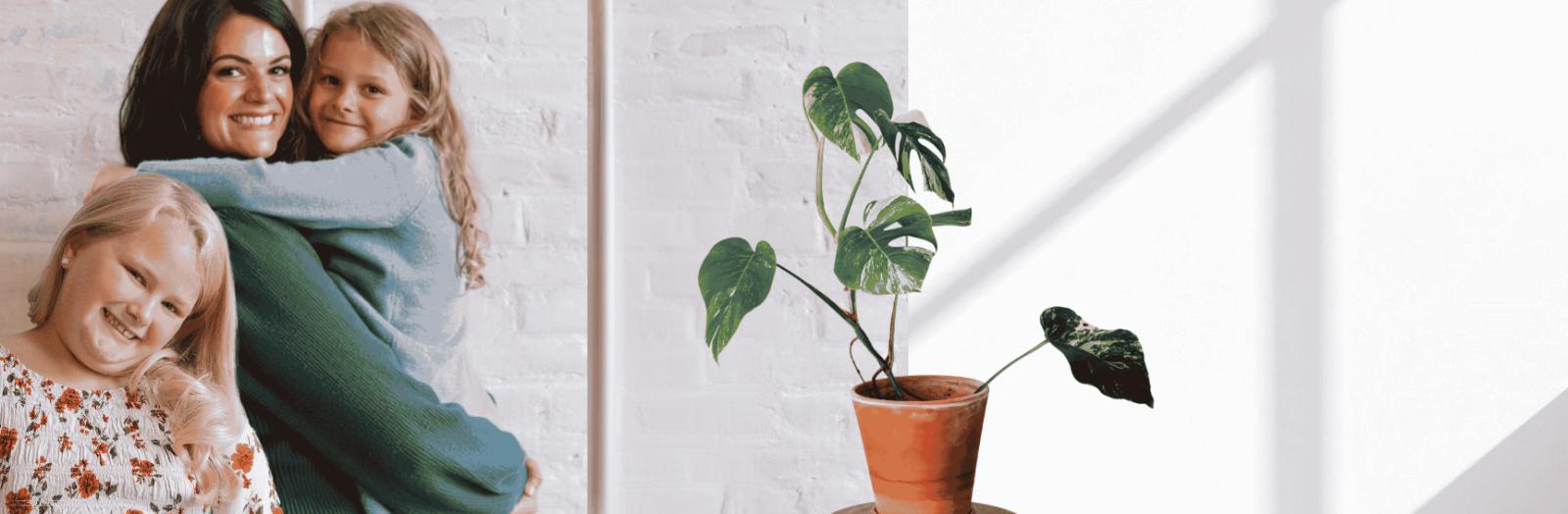
— Chelsea
La Bella Derma Medical Spa